Science is the foundational cornerstone of the Global Commons Alliance.
This financial year began with the launch of the Earth Commission’s Safe and Just Earth System Boundaries, published in the journal Nature in May, 2023. As the world rapidly approaches tipping points in the Earth-system, the Safe and Just boundaries quantify what is needed to maintain a stable and resilient planet, incorporating justice.
Peer-reviewed science
Building on previous science including the Planetary Boundaries work, and intended for translating into targets for economic actors, the Safe and Just boundaries consider intragenerational justice, intergenerational justice and interspecies justice in the same metrics as those determining the stability and resilience of the Earth system. In most cases what is defined as Safe and what is defined as Just is fully aligned: a healthy planet needs healthy people and vice versa.
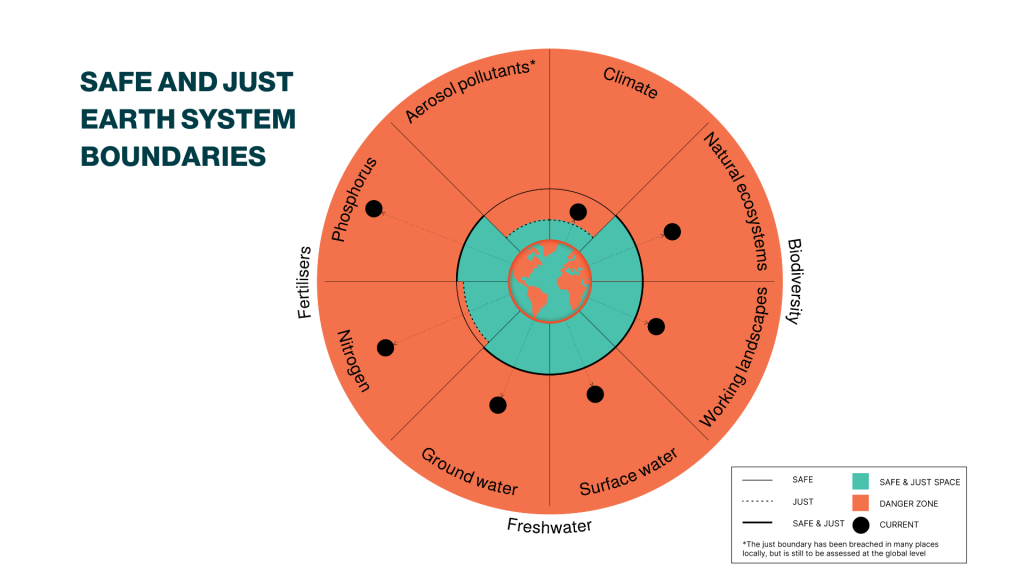
This groundbreaking research marks the beginning of the next generation of sustainability targets and is helping to shift the global conversation to include justice in sustainability considerations.
In 2024 the Commission was renewed, bringing new expertise to the next iteration of work, which will strengthen our understanding of the transformation pathways and add new domains – novel entities and ocean – to the research.
Fatima Denton, Director of the United Nations University Institute for Natural Resources in Africa (UNU-INRA) and holder of the Prince Claus Chair in Equity and Development at Utrecht University on Just Transitions, was announced as the new co-chair, working alongside Johan Rockström. She brings deep expertise in research and policy development and natural resource management in the African region to the Commission in its second phase.
Fatima Denton, Co-Chair, the Earth Commission
Influencer support
As global citizens and businesses, it's our collective responsibility to respond to this planetary emergency. That’s why I’m so excited about the important work of the Earth Commission to measure the impacts of nature on the wellbeing of all people and the resilience of economies. This research unlocks a critical new way of thinking about the business case for protecting the planet and taking actions that will safeguard it for the generations to come.”
Marc Benioff
Chair and CEO, Salesforce
At a time of polycrisis, this research project is timely. It is the result of four years of dedicated work by more than 40 leading scientists from across the world. The quantifiable limits they have been able to establish for climate, freshwater, biodiversity, and aerosol pollutants can contribute to the definition of a global safe zone, increase the resilience of our planet and ensure an equitable access to vital resources. It also provides practical guidance for companies, countries, and cities to set science-based targets within this safe and just zone. In this context, let us remember that trade can be a force for good for our climate. An open and transparent multilateral trading system, of which the WTO is part, can play a positive role in helping countries achieve a low-carbon, resilient, and just transition”
Dr Ngozi Okonjo-Iweala
Director-General, World Trade Organization
The climate and nature crises we are facing today at 1.2 degrees of warming have already breached the ‘just’ boundary, disrupting millions of lives in the most vulnerable parts of the world. Equity must be central in our response to these crises. Every fraction of a degree of warming has a direct impact on people’s lives and livelihoods, from undermining food security and displacing families from their homes to increasing the risk of disease and so much more. There has never been a more urgent need for leaders to take transformational action to limit global warming, protect nature and build a just economy for all.”
Ani Dasgupta
President and CEO, World Resources Institute
To counter unacceptably high levels of insecurity and inequality, we need an economic model that protects nature and people. A just transition to a sustainable economy would create reliable jobs and shared prosperity. By quantifying the future needs of humans as well as those of the planet, the Earth System Boundaries give us the scientific framework we need to work towards that goal with all our strength.”
Sharan Burrow
Former General Secretary, International Trade Union Confederation
This robust and comprehensive science will allow governments and industry to understand and improve – for the first time – their impact on our Earth against human boundaries as well as biophysical, Planetary Boundaries. In practice, for CEOs, taking this people-centric approach is going to mean more ambitious and urgent targets and actions. Following the research, as we should, will mean setting the bar higher, but ultimately setting it where it belongs, with human-beings at the heart of our collective efforts to build a better and safer future for all.”
Paul Polman
Business leader and co-author of ‘Net Positive: how courageous companies thrive by giving more than they take’, former CEO of Unilever
In 1992 humans created the Biodiversity and Climate conventions for multilateral action, and for too long we’ve assumed that these issues were separate from each other. That separation has guided government and corporate acting and thinking on the environment for the past thirty years. What this new science makes clear is that the Earth System is not made from separate building blocks: everything is interdependent, including human beings. The urgency to act is not new - we know we are breaking boundaries - but the insight from this groundbreaking science: that if we act holistically and put human wellbeing and equity at the center, we can have a safe and just space on Earth for all future generations, gives us even more reason to be stubbornly optimistic such a future is possible. I hope this science creates a real mindset shift for government and corporate action.”
Christiana Figueres
Former Executive Secretary, UNFCCC, co-founder, Global Optimism, and co-host, Outrage + Optimism
The analysis and proposal [of Safe and Just boundaries] published today provides a powerful example of how science functions when different teams study and refine each other's work. Walking a more just and sustainable path would not be easy but it can only be done through inclusive collaboration.”
Magdalena Skipper
Editor in Chief, Nature
Global media coverage
1,375
Media stories around the world about the Safe and Just Earth System Boundaries within the first 24 hours of release
$31 million
Equivalent advertising budget of the combined reach of these stories in terms of audience
Thanks to collaboration with the strategic communications agency Milltown Partners and the Global Strategic Communications Council, we generated over 1,375 media stories around the world about the Safe and Just Earth System Boundaries within the first 24 hours of release, including top tier media coverage in:
- Bloomberg: Humans Have Blown Past Key Limits for Earth’s Stability, Scientists Say;
- The Financial Times: Earth past its safe limits for humans, scientists say;
- CNN: If climate goals are meant to protect us from ‘significant harm,’ then they aren’t good enough, scientists say;
- The Guardian: Earth’s health failing in seven out of eight key measures, say scientists;
- The Times: Human impact on the environment ‘passing safe limits’;
- the Washington Post, CBS News, The Independent and ABC News
- Evening Standard, and The Independent.
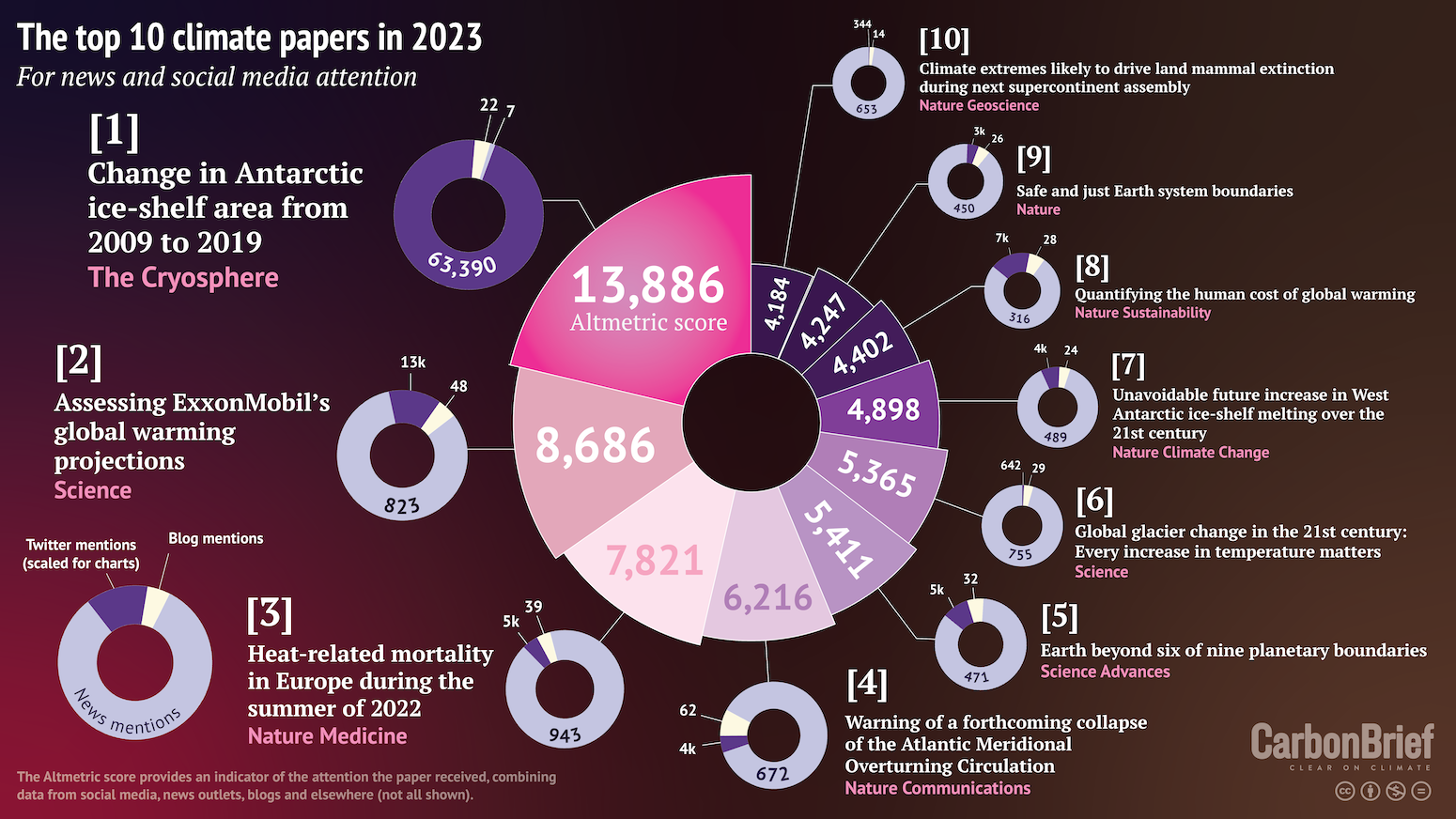
The combined reach of these stories in terms of audience was equivalent to an advertising budget of over $31 million. As a result, the Safe and Just Earth System Boundaries research was recognised as one of the top 10 most influential climate papers of 2023.
Engaging visuals
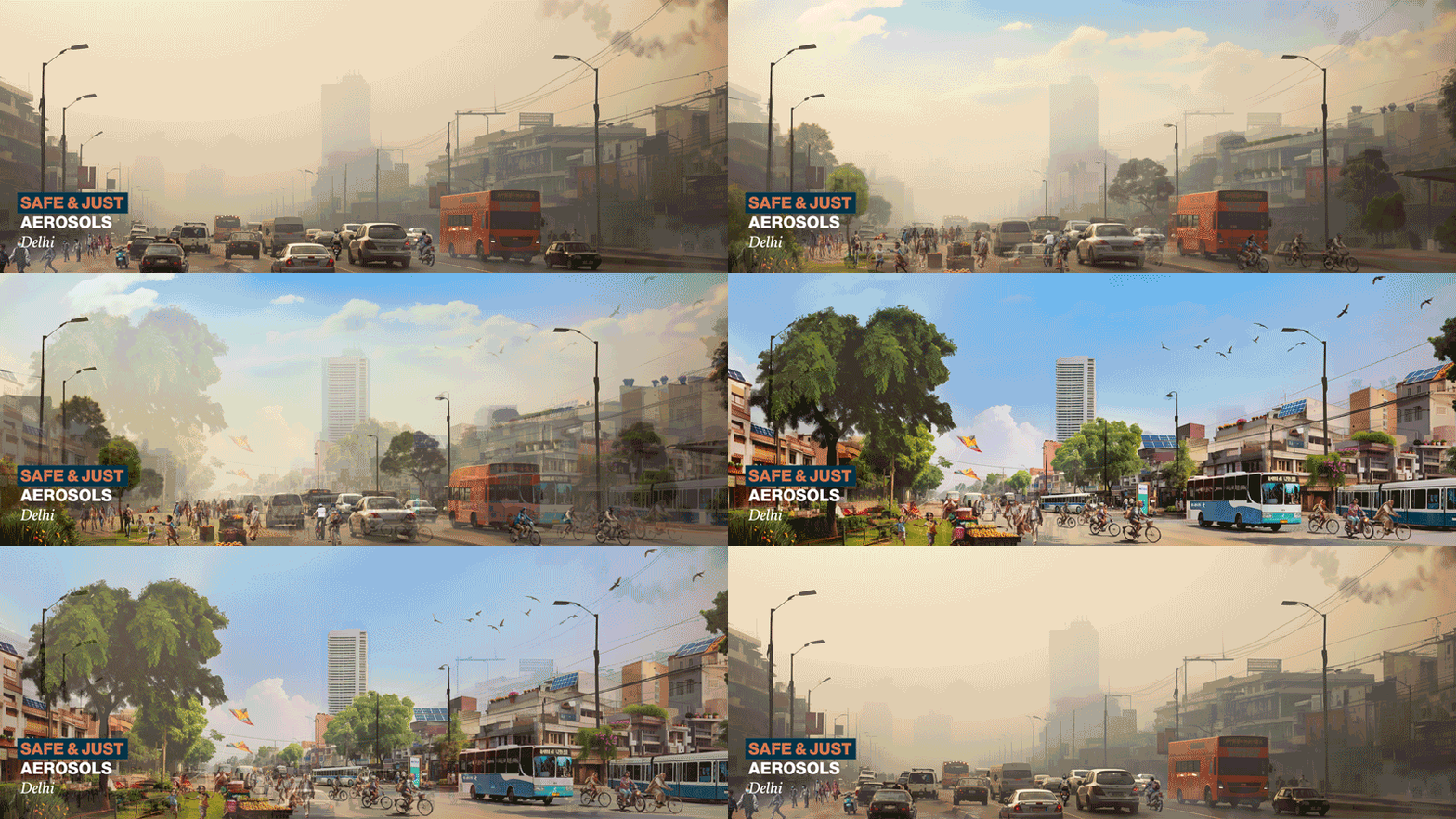
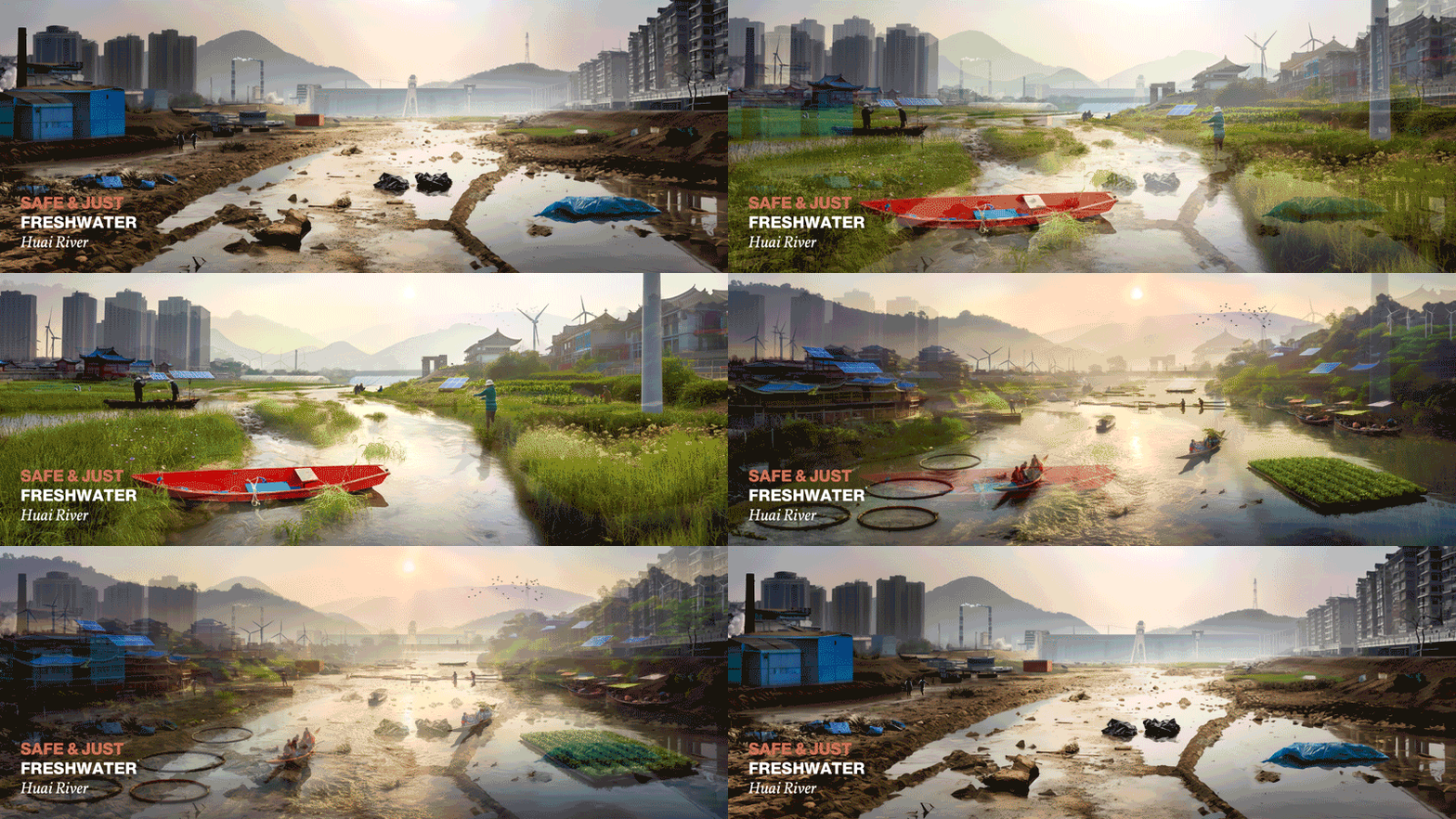
In 2023 the Global Commons Alliance partnered with futures design agency Superflux through the Earth Commission to create a first-of-its-kind set of science-based images that show a safe and just future in a series of locations around the world.
This powerful imagery represents the beginning of what we hope will be a longer partnership to help people from all walks of life see the Safe and Just space identified by the boundaries come to life. These images are now used across the Alliance’s communications to inspire decision makers and others to become better guardians of the global commons.
20-25%
One of the Safe and Just boundaries includes ensuring 20-25% of every km2 of landscapes dominated by humans, such as farmlands, managed forests and urban areas, is for semi-natural habitat nature – so that critical local ecosystem services can be secured

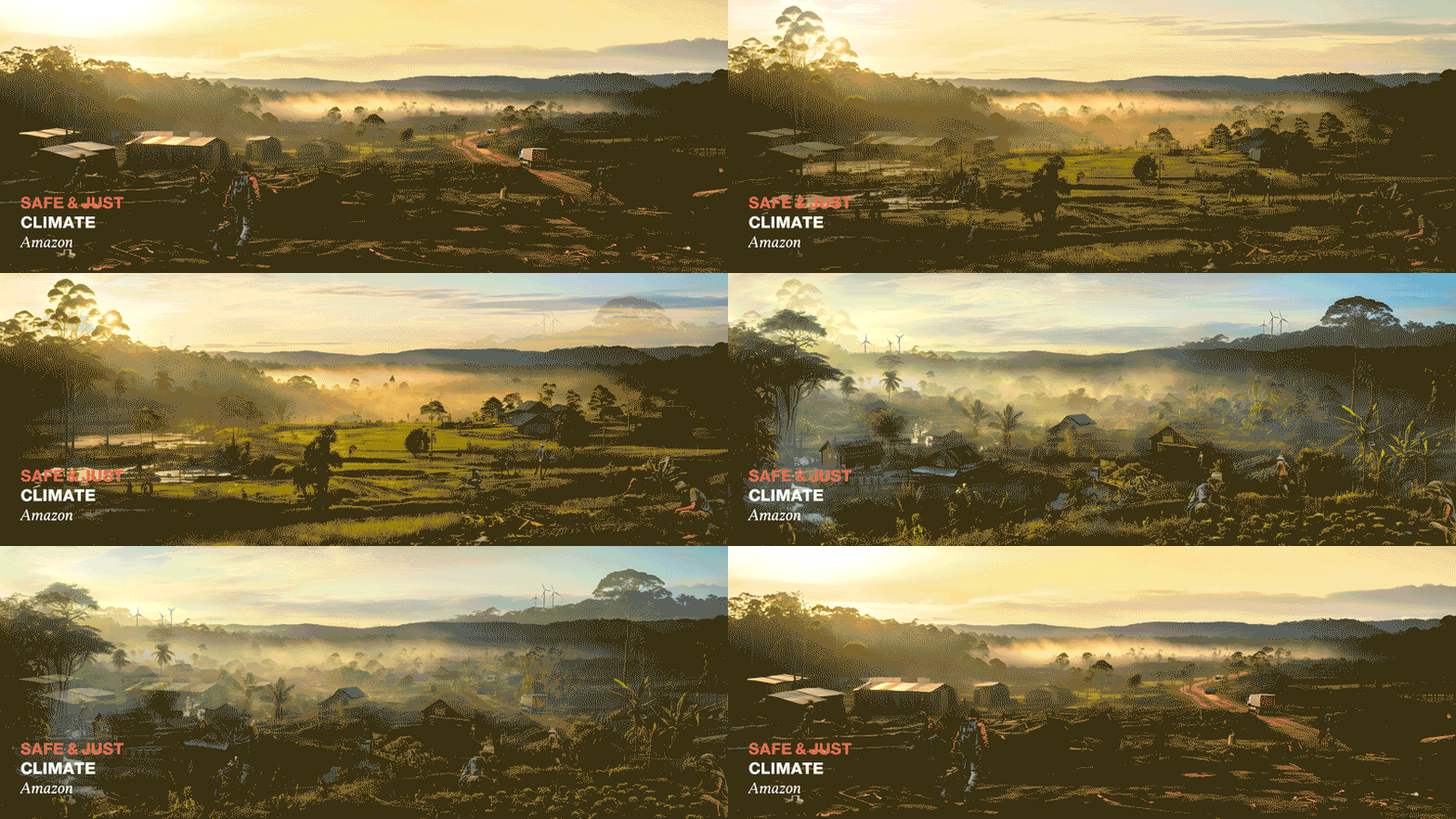
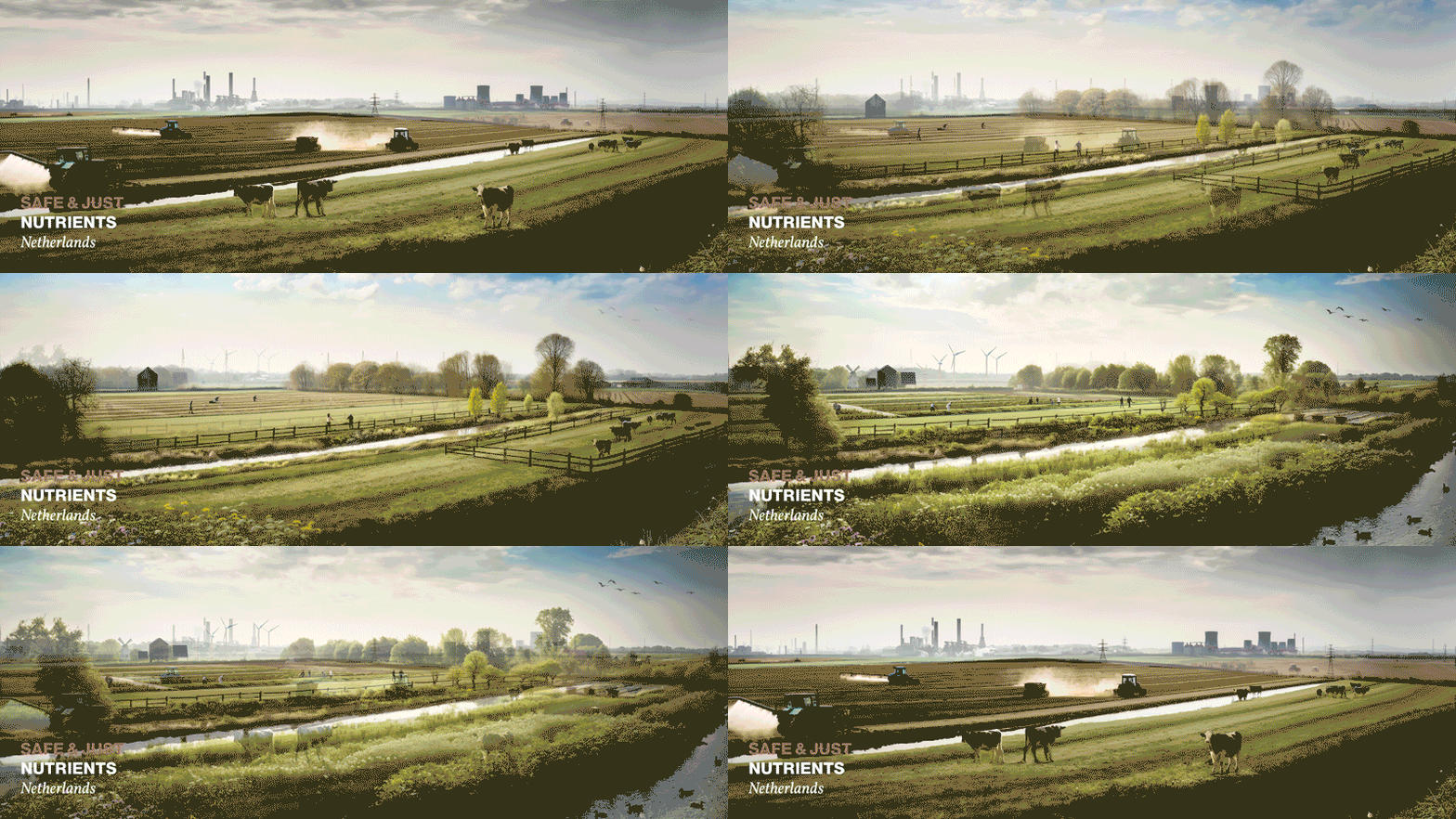
The safe and just future is a planet teeming with life, so in December 2023, we began rolling out our new visual identity to better portray that vision across all our communications.
This has already helped increase our audiences and engagement across our digital channels, where we promote the Safe and Just boundaries. It also helped us in recruitment: advertisements for new roles within the Alliance after the branding was deployed secured record numbers of high-quality applicants (well over one hundred for one core team role) according to our recruitment partner Daryl Upsall.
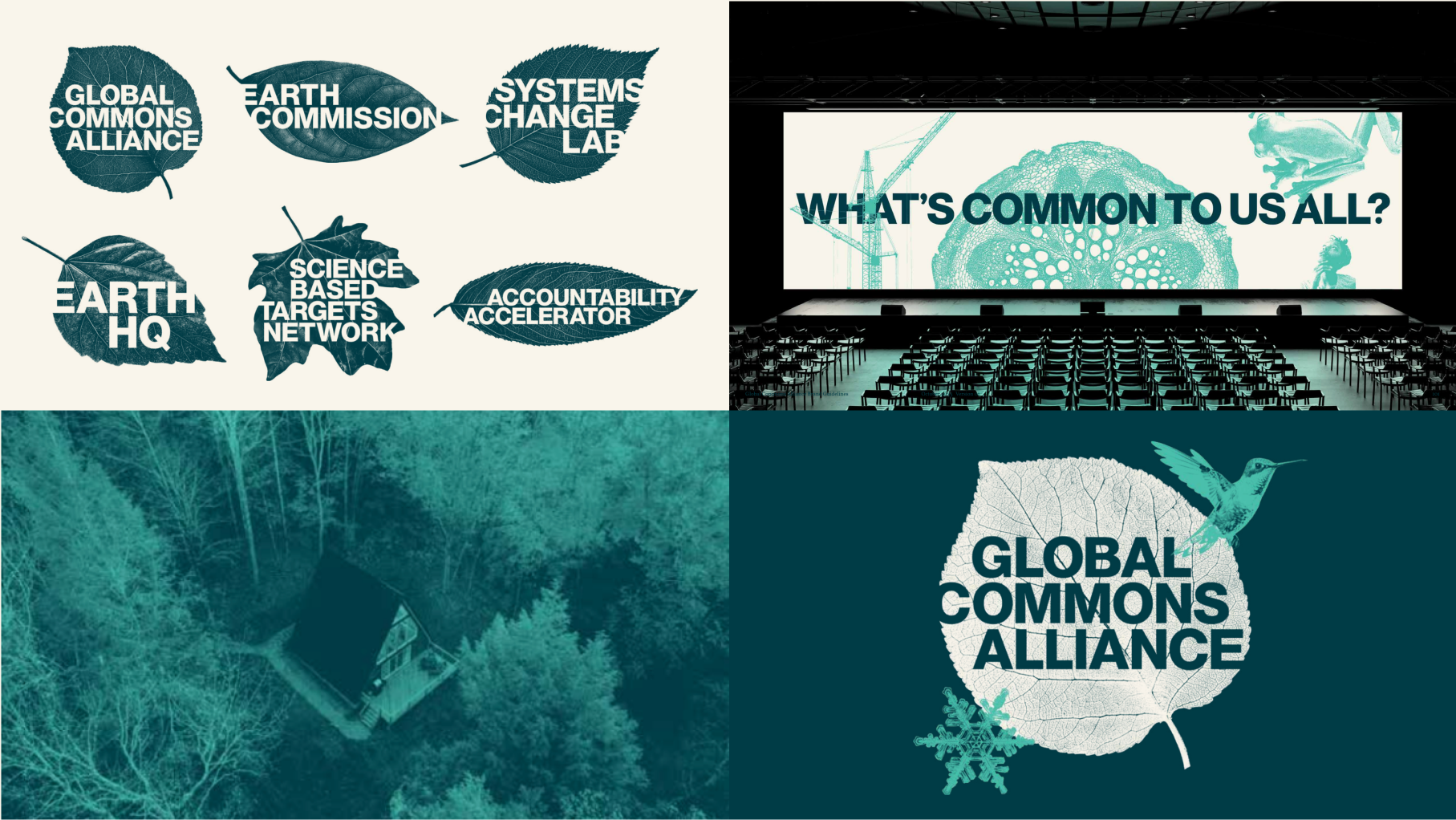
It’s a very robust identity that can pretty much tackle any global theme by mixing different spot illustrations and keeps things simple, direct, and poignant.”
A review of the new brand in the magazine ‘Brand Review’
Convening
At COP28 we unfurled our new visual identity at the Global Commons Pavilion. The Pavilion served as a hub for collaborative conversations, bringing together diverse voices to shape the future of the global commons.
30+
Events participated in or hosted at COP
100+
Partner organizations across the Alliance
The Pavilion hosted powerful calls to action and stories from young people, Indigenous peoples and local communities, about the coalitions they are forming and the action they’re taking in cities and across landscapes.
They shared visions and examples of change, demonstrating that a better world is possible, including by connecting traditional knowledge with cutting-edge science.
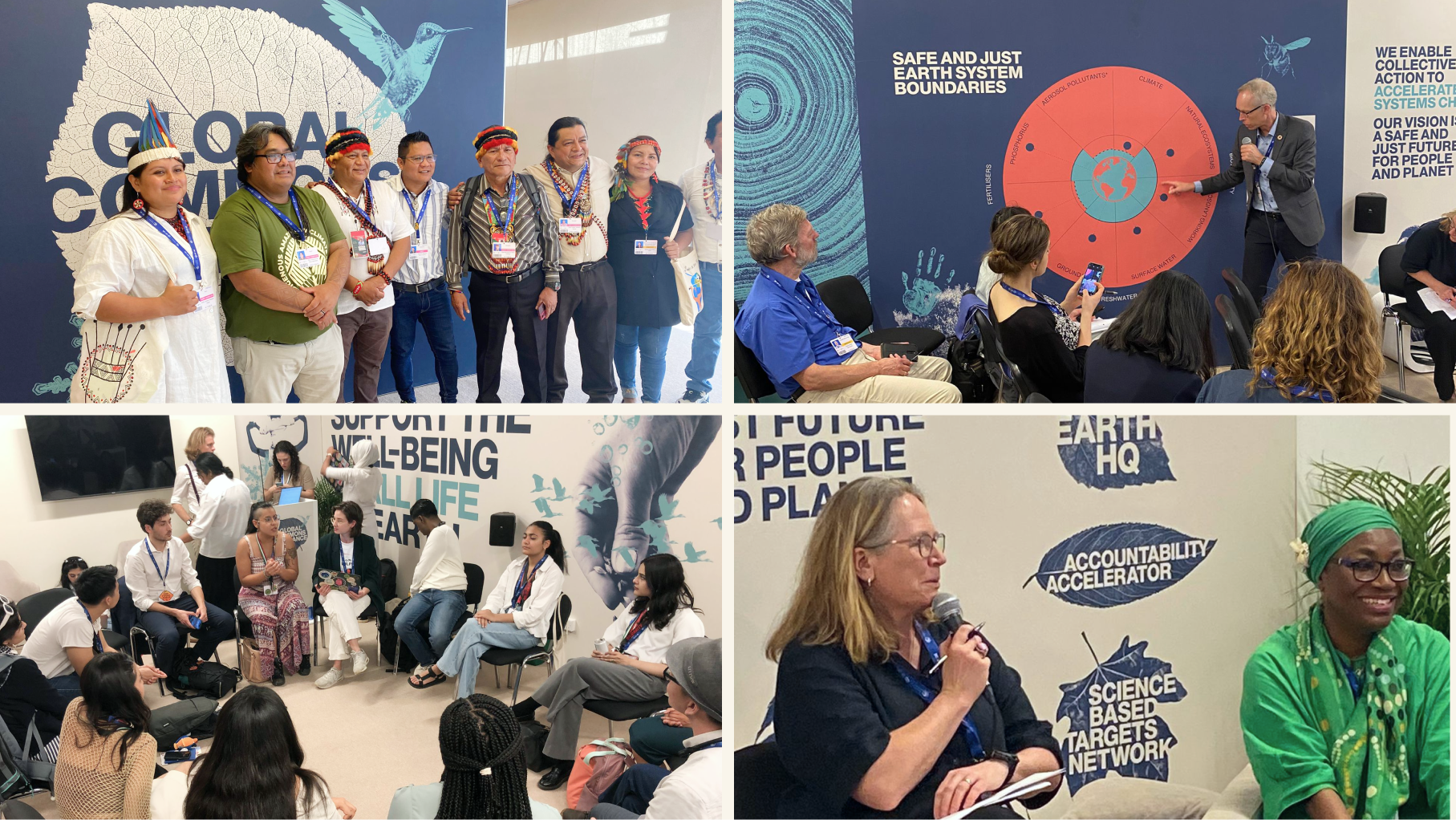
Global Commons Pavilion at COP28
In April, 2024, we helped convene health experts and Earth-system scientists in conversation at the Planetary Health Alliance’s Planetary Health Summit in Malaysia. Our discussion focused on how, for science to be transformational, it must inform action and be communicated in ways that the public can understand, and decision-makers can act upon.
This convening marked a deepening of our partnership with the Planetary Health Alliance and enabled us to meet and learn from a local indigenous leader from the Orang Asli tribe, who live in the forests along the spine of the peninsula in Malaysia. As a result of the visit, our media partner Mongabay is now following up to investigate and report on concerns about the impacts of a railway under construction through the Orang Asli’s forests.
Ensuring indigenous peoples are able to protect and steward their ancestral lands is critical to everyone’s survival. The Accountability Accelerator’s focus on supporting the rights of indigenous peoples and local communities to defend their land against corporate pollution and unwanted development is so important in this regard. You can read more about it in the Moving people to action chapter.
Influencing decision making
We celebrated the publication of the Safe and Just boundaries in Nature at the Royal Swedish Academy of Sciences. After the event one Nordic city approached the Global Commons Alliance to say they’d like to figure out how to implement the Safe and Just boundaries within their city.
Watch Future Earth and the Earth Commission present ‘Earth systems boundaries for a just world on a safe planet’, live on We Don't Have Time on June 9, 2023
Because the Earth Commission science put forward quantifiable metrics – in the same currency – that consider both people and planet, the city government representative felt this could be woven into their economic policy development, and work has begun now to develop a collaboration and joint program between our Alliance and Nordic cities to test out what is possible. You can read more about this in the Demonstrate to upscale chapter.
Moving people
To demand actionAn informed public can take meaningful action by advocating for change, voting for change – either at the ballot box, with their wallets, or by raising their voices to demand it – as well as by implementing changes in their own backyards and communities.