


Governance and legal frameworks play a vital role in enabling systems change toward a just world on a safe planet. This is why the Global Commons Alliance is working to integrate Safe and Just boundaries and Earth System Justice into policy and governance from the global to the local. Here are some snapshots of our work engaging in this space.
- To support decision-making at global and national levels, accurate data is critical. Following the Earth Commission’s session on downscaling for cities with the Cities of Copenhagen and Helsinki, Systems Change Lab launched its cities system data, (some stats below) and 2035 sectoral targets which were presented at Bonn — reinforcing the need for localized pathways to meet global climate goals.
- The newly redesigned Forest Declaration Dashboard from the Forest Declaration Assessment and Systems Change Lab went live in October, offering updated data to track progress toward the 2030 forest goals for biodiversity and climate.
- Earth HQ supports the Future Generations Tribunal to amplify the voices of youth demanding justice for future generations by connecting them to global efforts in climate decision-making.
2.5 billion
more people are expected to live in cities and urban areas around the world by 2050.
70%
of global CO2e emissions are attributable to cities and urban activities, but cities often have lower emissions per capita than national averages due to efficiency.
2.1 billion
tonnes of municipal waste was produced by cities in 2023, with volumes projected to increase to 3.8 billion tonnes by 2050.
1/4
of urban GHG emissions could be reduced by 2050 compared to business-as-usual levels, through integrated spatial planning for efficient and compact urban growth.
- Accountability Accelerator grantees InfoAmazonia published findings of its year-long investigation uncovering the impacts of oil exploration in the Amazon
- An award-winning photograph (funded by Accountability Accelerator) commissioned by the China Global South Project depicted mining impacts in Indonesia
- Grantee Proforest Africa released Free Prior Informed Consent guidelines in the Republic of Congo and Liberia
- Justiça Global’s Grão-Pará Maranhão Project is advancing environmental and human rights protections in South America, where grantees are translating global frameworks into urgent, community-driven change.
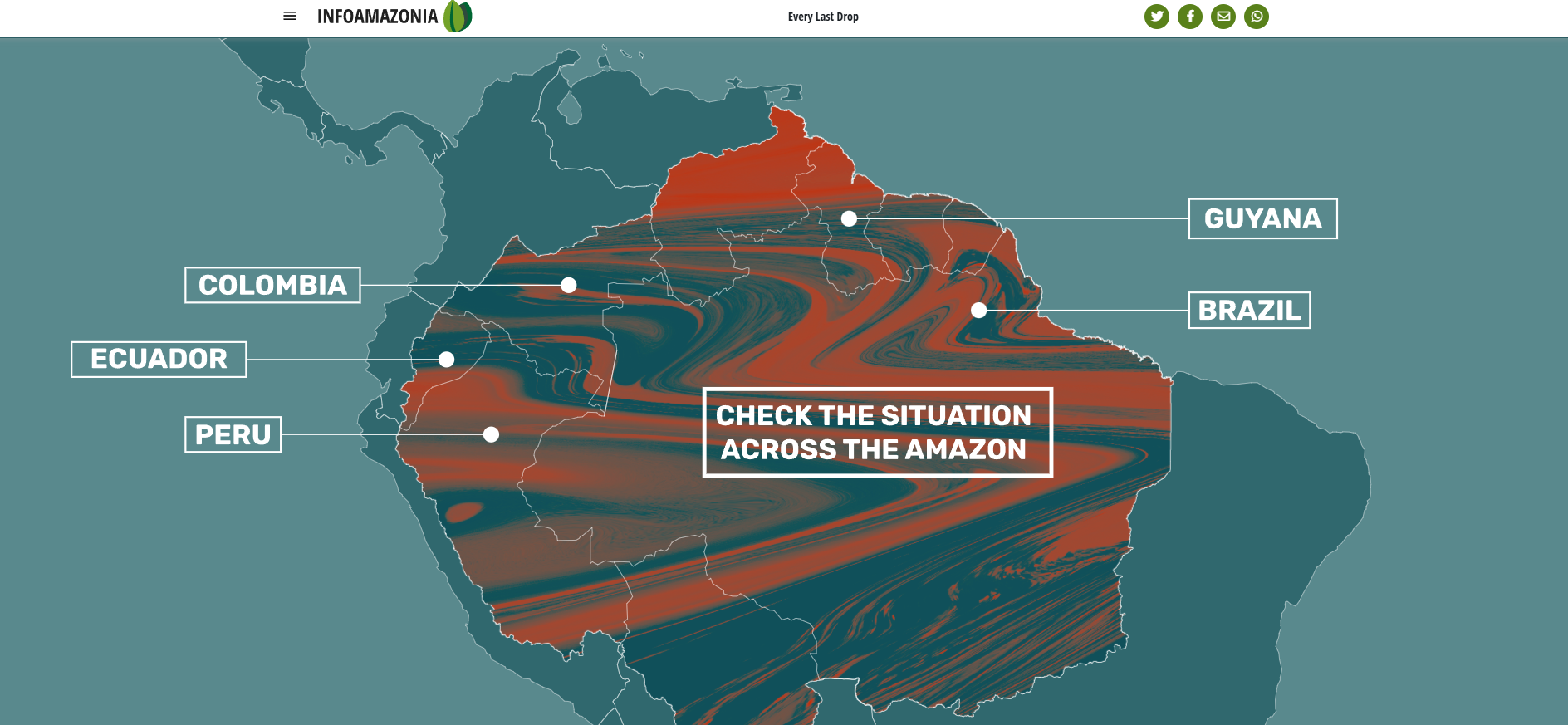
InfoAmazonia project 'Until the Last Drop'
- At Climate Week NYC in September, a GCA event co-hosted with ClientEarth at Christie’s showcased the latest innovations in law and science to protect all life on Earth. Here an expert panel discussed how groundbreaking science and bold and innovative legal interventions are transforming corporate action and attitudes towards the climate and nature crises. Margarita Astralaga, Chair, the Global Commons Alliance, stressed the importance of strengthening the governance of the global commons and why placing human rights and science at the forefront of local, national, and international governance and legal action can spur the positive change we so urgently need to see.
We need to have people in the center. We have to make sure that what we are proposing is respecting their rights. The rights of the most vulnerable communities and Indigenous Peoples. [..] Part of our job is to discuss these possibilities of new legislation that will help these rural and vulnerable communities.”
Margarita Astralaga
Chair, Global Commons Alliance, speaking at ClientEarth and Global Commons Alliance law and science event at Climate Week NYC in October 2024
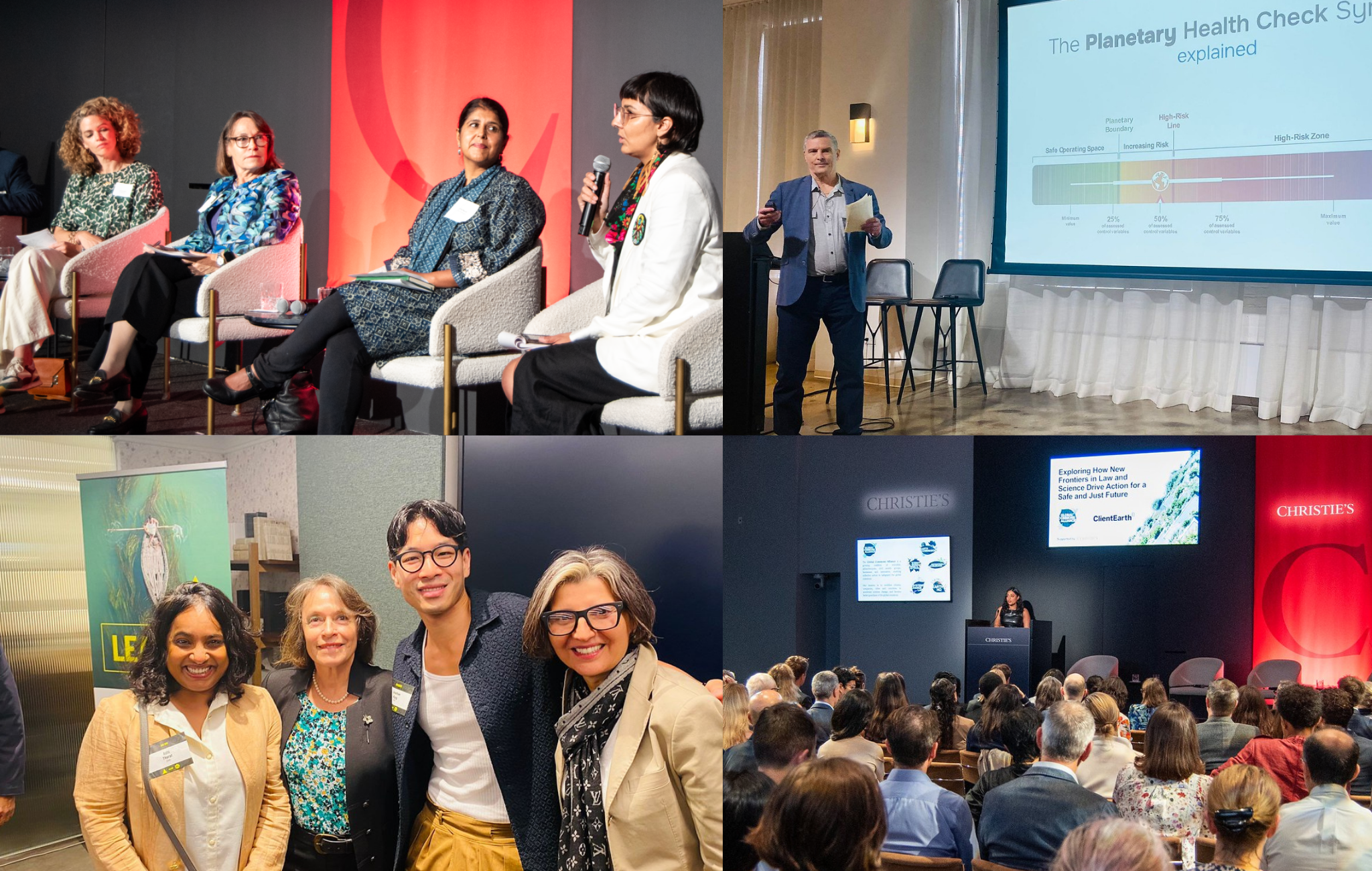
Global Commons Alliance at Climate Week NYC 2024
- A major piece of the environment, human health and social equality challenge is feeding 8 billion people on our planet. In May, the Earth Commission hosted a webinar presenting key leverage points to mitigate food system impacts and utilize a positive tipping point framework, focused on how technological innovations, strategic policy design and human agency can help accelerate a food system transformation.
- Systems Change Lab launched its economic and food system data in the first quarter of 2025. Its research on the latter shows that recent progress in food and agriculture isn’t happening at the pace and scale necessary to secure healthy and sustainable food for all, with global efforts lagging on nearly every measure.
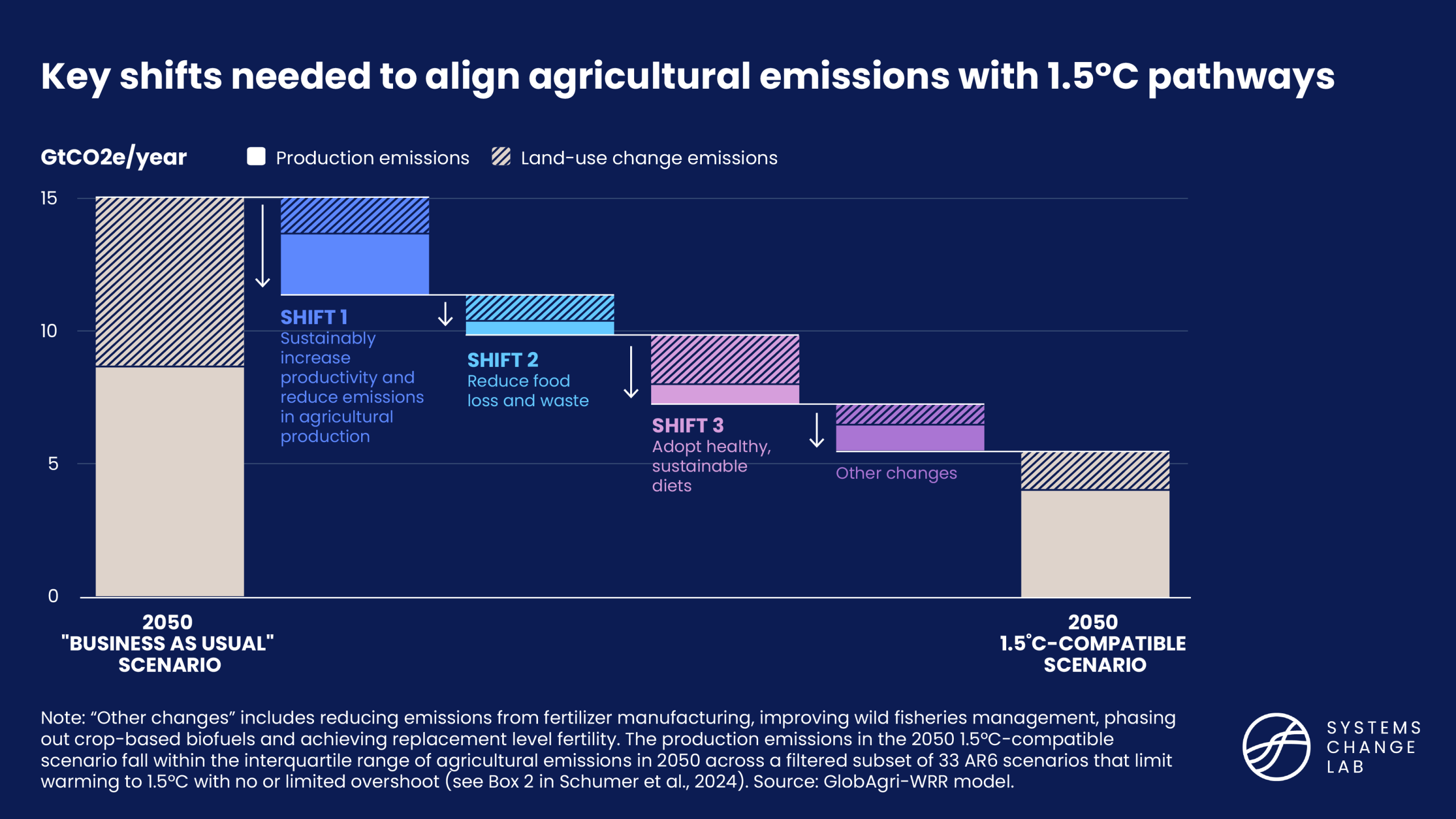
Food systems data from Systems Change Lab
- A report led by Earth Commissioners Joyeeta Gupta and Diana Liverman published in October 2024, offers a pathway to managing Earth’s resources justly while meeting the basic needs of all. The Governance Architecture for a Safe and Just World report outlines a governance model that respects Earth system boundaries while addressing inequality. It builds on Earth system justice principles, highlighting the need for global governance to ensure equitable resource distribution. It stresses the importance of transforming global governance structures, emphasizing a justice-centered approach to how resources like water, energy, and food are shared.
- To align policy and governance with the goal of a Safe and Just planet, efforts are intensifying to address the systemic risks and human rights impacts of high-emissions and high-extraction sectors. On the sidelines of the UN Forum for Business and Human Rights in October, the Accountability Accelerator and Laudes Foundation hosted a roundtable to address the integration of human rights, nature, and climate within corporate strategies. Because despite emerging policies requiring responsible corporate action, many companies treat these issues in isolation. With an interdisciplinary group of experts, attendees discussed opportunities within global frameworks, policy and regulatory pathways for integrated accountable corporate actions, and industry standards and methodologies that drive responsible business practices.
- In February the Accountability Accelerator hosted a workshop on Transition Minerals in Jakarta, highlighting the urgent need for transparent, equitable governance in the sourcing of critical materials for the energy transition.
- Another sector under scrutiny is transport, which remains a major contributor to global emissions. To help shift this system, the Systems Change Lab team participated in the Transforming Transportation 2025 conference in the US, co-hosted by the WRI Ross Center and the World Bank, in March — bringing systems thinking to the heart of infrastructure and mobility policy conversations. Together, these efforts are laying the groundwork for governance systems that uphold both ecological integrity and social equity — crucial foundations for systemic change that safeguards the global commons, stays within planetary boundaries and leaves no one behind.
But to achieve all of this, we must be better aligned, more influential, and more capable of collective action: no matter what our geopolitical future looks like.